I need to tell you about the road.
Not the village — we'll get there. But first, the road, because nobody warns you about the road, and they absolutely should.
The drive up to Gourdon winds through the Gorges du Loup — a canyon so dramatic and vertiginous that the road clings to the cliff face like it's doing its best and hoping nobody notices. On one side: solid rock. On the other side: a drop so steep and so long that looking at it rearranges something in your chest.
The first time we went, Ludo was driving. He was going 30km/h — specifically so I wouldn't be scared. He was trying to be kind. He is a good man.
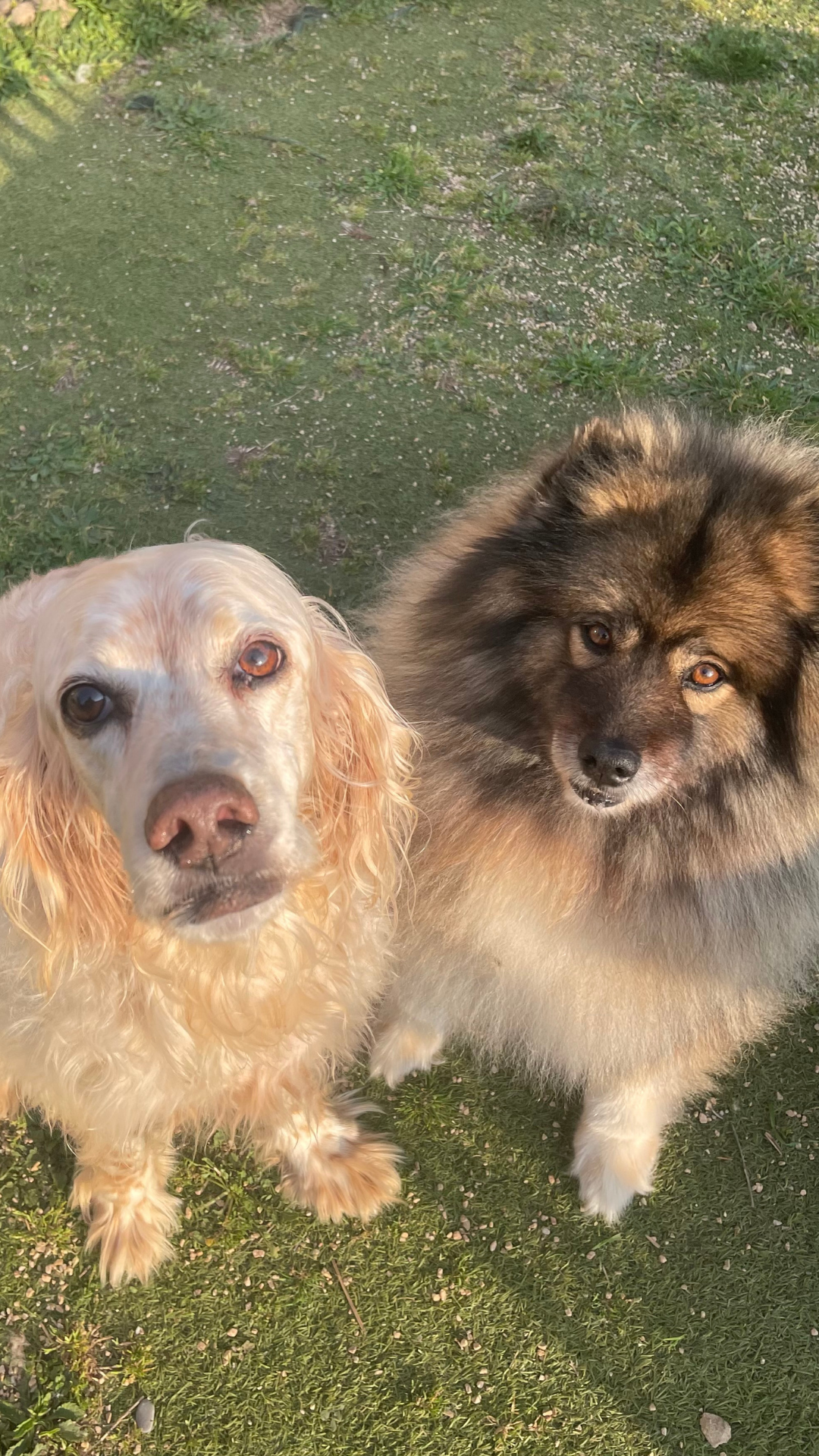
I was still terrified. The dog, wedged between the bags in the back, had her paws flat against the seat and was giving the window the same look I was giving it. We did not discuss this but we understood each other perfectly.
Ludo found this deeply funny. We did not.
By the time we arrived at the village, I had white-knuckled the door handle for twenty solid minutes, the dog had not moved a single muscle, and Ludo was still chuckling quietly to himself. I stepped out of the car on slightly unsteady legs, looked up at the stone village perched against the sky, looked back at the road we'd just climbed, and made a decision on the spot: I was not going back down. Not today. Possibly not ever.
Reader, I meant it.
✦ ✦ ✦
The village
Gourdon sits at 760 metres on the edge of a cliff so sheer it looks like a dare. The views stretch over 80 kilometres of coastline — Nice to Théoule, the Mediterranean a glittering suggestion in the distance. On a clear day they say you can see Corsica. I've squinted hopefully many times. The jury is still out.
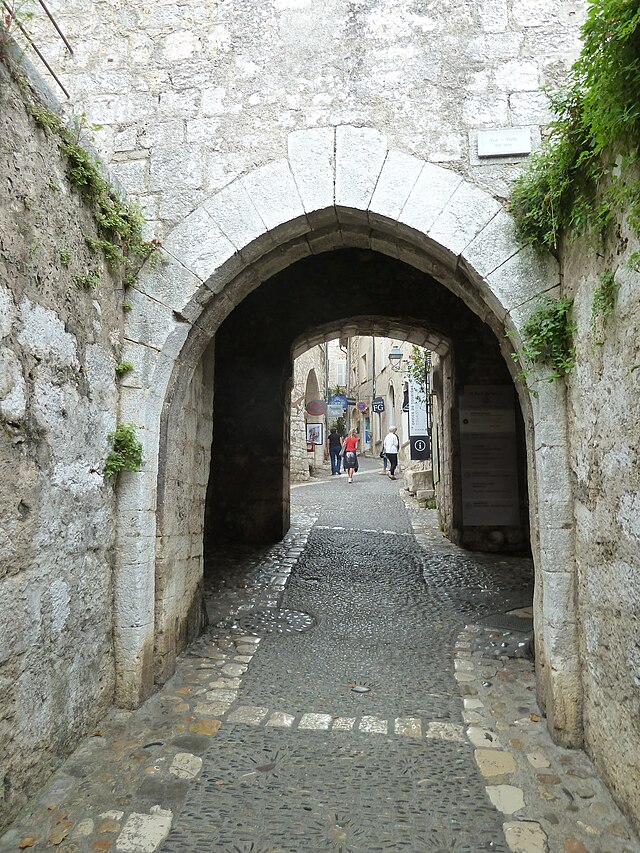
The village itself is small, cobblestoned, medieval, and utterly intoxicating. Narrow streets that smell of lavender and warm stone. Houses that have been standing since the 12th century and don't feel the need to apologise for anything.
We wandered for a long time before we bought anything, which is unusual for me.
Then we found L'Atelier du Loup, a little glassblowing workshop on the main street where a man in a leather apron was turning molten glass into something extraordinary while we watched, completely transfixed, for far longer than planned. I left with a small blown-glass bowl in pale blue and green that sits on my windowsill to this day. It cost more than I intended to spend and I have never once regretted it.
Next door was Sainte-Catherine, a family shop tucked into a former castle chapel, and this is where things got out of hand. Flavoured olive oils — lavender, rosemary, lemon. Jams made from figs and from violets and from things I couldn't quite identify but bought anyway. A jar of local honey so dark it was almost black. A terrine of wild boar that Ludo picked up and never put down. I walked out carrying a bag that weighed considerably more than when I'd walked in and felt nothing but satisfied.
Further along, La Boutique des Senteurs was selling perfumes and soaps in shades of rose and amber and green. I bought a lavender soap that smelled like the whole of Provence compressed into a small rectangle. The woman behind the counter wrapped it in tissue paper and tied it with string the way people used to before everything came in plastic. Small things matter.
✦ ✦ ✦
Lunch with Jean-Paul
By the time we'd finished shopping, it was past noon, the light was high and golden, and the village smelled of something roasting somewhere. We found a table on the terrace of Le Nid d'Aigle — the Eagle's Nest — a restaurant perched right at the edge of the cliff with a view so outrageously good it felt almost theatrical.
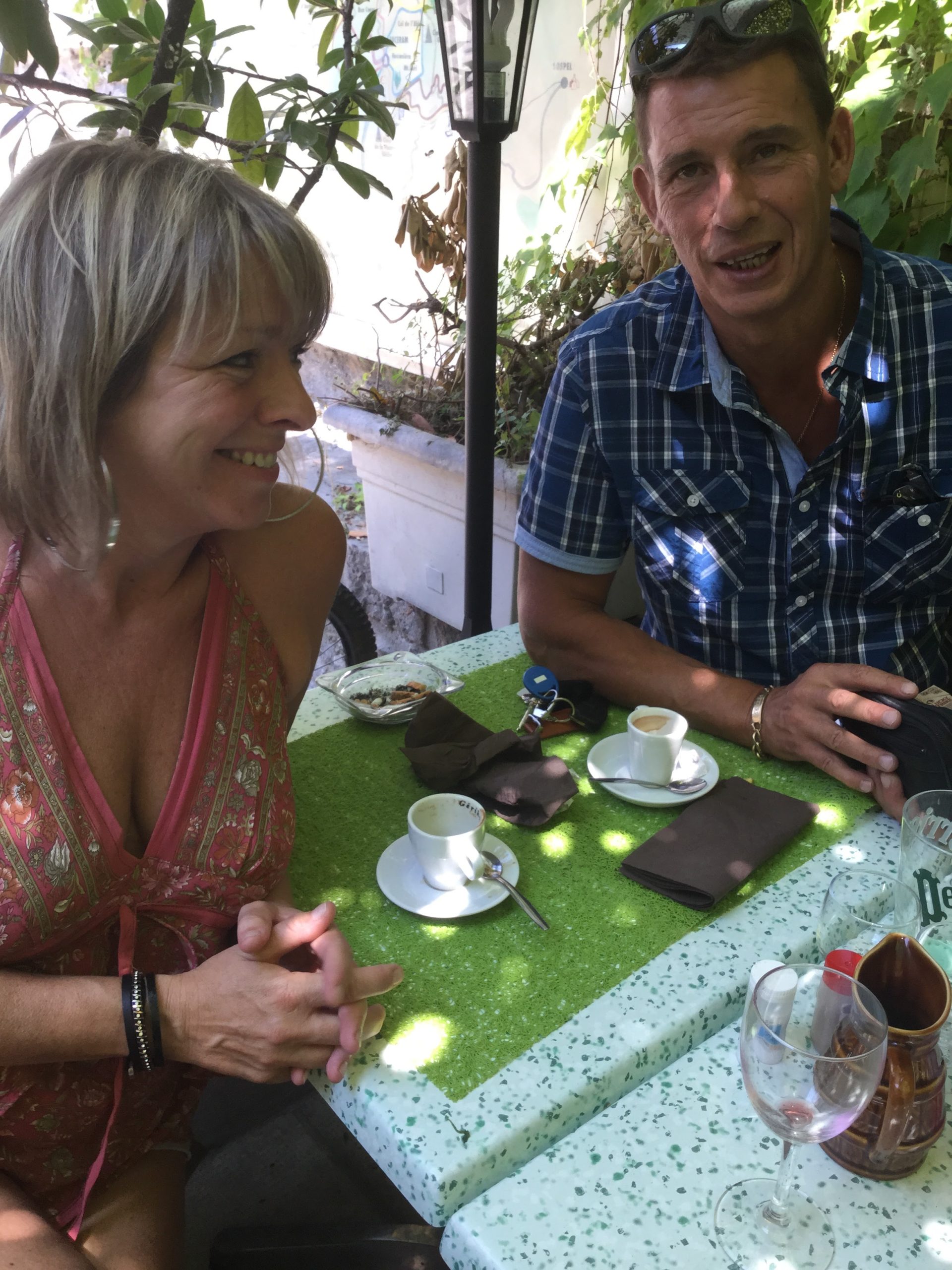
Our waiter was Jean-Paul. Jean-Paul was in his sixties, unhurried, with the particular energy of a man who has been bringing people food with a view like this for thirty years and has never stopped being quietly pleased about it. He recommended the lamb. He was right to.
I had the soupe au pistou to start — thick, fragrant, the kind of thing that tastes like someone's grandmother made it and then a professional finished it. Ludo had the tarte aux légumes du soleil, layered with courgette and tomato and something herby that neither of us could name but both of us wanted more of.
For the main: Ludo had the agneau de pays rôti — Jean-Paul's lamb, slow-roasted, falling apart, served with a gratin dauphinois that had a crust on top like a tiny golden roof. I had the daube provençale, a beef stew braised in wine so long it had forgotten it was ever anything other than tender, with olives and orange peel and herbs. I had a carafe of local rosé. Ludo had water. He watched me drink it with the serene expression of a saint.
At some point Jean-Paul appeared without being summoned and refilled my glass. He glanced at the view, then back at me, with the look of a man who has seen this exact moment happen at this exact table a thousand times and never gets tired of it.
We ordered dessert. Of course we ordered dessert. A tarte tropézienne for Ludo and a crème brûlée à la lavande for me — the sugar crust cracking under the spoon, the lavender underneath just present enough to remind you where you were without overwhelming everything else.
And then the bill came and I ordered one more glass of wine.
Ludo doesn't drink. He watched me serenely from across the table, with the patience of a man who has accepted this about his wife and made peace with it long ago.
I was not drinking because I was thirsty.
I was drinking because of the road.
Someone had to.
✦ ✦ ✦
The negotiation
This is the part where I tell you that by the time lunch was finished, the carafe empty, and the afternoon light turning the whole valley below into something out of a painting, I had a genuine, non-ironic conversation with Ludo about whether we could simply stay.
Not in the restaurant. In Gourdon. Permanently.
I had mentally furnished a small stone house near the chapel. I had decided which shop I would visit every Saturday morning. I had already accepted that the road would be part of my life and that I would eventually become one of those people who drives it at normal speed without thinking.
The dog, it should be said, was asleep under the table by this point and showed absolutely no interest in going anywhere.
Ludo pointed out, gently, that we had jobs. A home. That this was not actually a plan.
I looked at the view. I finished my wine. I ordered a coffee to seem reasonable.
We drove back down at 30km/h. I held the door handle. The dog pressed her paws flat against the seat. The gorges dropped away below us in the golden afternoon and the whole thing was terrifying and magnificent and I thought: we are coming back.
We always do.
✦ ✦ ✦
The practical bits
Getting there: By car only. From Cannes, about 40 minutes. From Nice, about 45 minutes via the Route du Loup. The drive through the gorges is half the experience — just breathe.
Parking: Free lots just below the village entrance. In July–August, full by mid-morning. Arrive before 10am or visit in low season.
Best time: May, June, September, October. Quieter, warmer than you'd think, and the light is extraordinary.
Shoes: Cobblestones. Wear something you can actually walk in.
If you're the passenger: A valium would not be out of place. I say this with love and without judgement. The road is beautiful. It is also vertical. You will be fine. Probably.
If you're driving: Go slow. Your passenger will thank you. Mine went 30km/h and I was still a wreck.
Dogs: Welcome in the village. Significantly less enthusiastic about the road. Bring their favourite blanket for the back seat.
Bonus stop: 2km back down the D3, a Belvédère viewpoint lets you see the village from outside, clinging to its cliff. Most visitors miss it entirely. Don't.
Oh, I know you want more.
With warmth — and a white-knuckle grip — from the South of France,
Nancy
cotedazurrental.com
 Riviera Reality